STP vs ETP: What’s the Difference and Which Treatment System Do You Need?
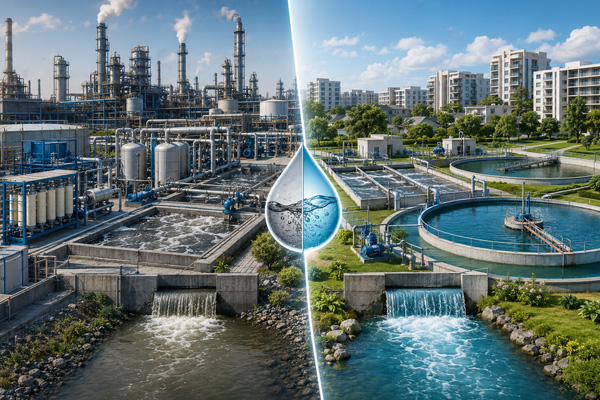
STP (Sewage Treatment Plant) and ETP (Effluent Treatment Plant) are both wastewater treatment systems, but they are designed for different types of wastewater. An STP primarily treats domestic sewage generated from toilets, bathrooms, kitchens, and other household or commercial activities. Its main objective is to reduce organic matter, suspended solids, pathogens, and other contaminants so that the treated water can be safely discharged or reused for suitable applications. In contrast, an ETP is designed to treat industrial effluent, which may contain chemicals, oils, heavy metals, dyes, solvents, and other process-specific pollutants generated during manufacturing and production activities.
Choosing between an STP and ETP depends mainly on the source and characteristics of the wastewater. Residential buildings, hospitals, hotels, offices, and commercial facilities generally require STP solutions, while industries such as pharmaceutical, chemical, textile, food & beverage, and manufacturing may require ETP systems based on their wastewater characteristics and treatment requirements.
Singh Gloss and Grit provides application-focused water and wastewater treatment solutions, helping clients assess their wastewater requirements and select an appropriate treatment approach. With the right system, businesses can improve wastewater management, support water reuse, reduce environmental impact, and achieve reliable long-term treatment performance.